
AI-enhanced robotic automation for real-world manufacturing variation.
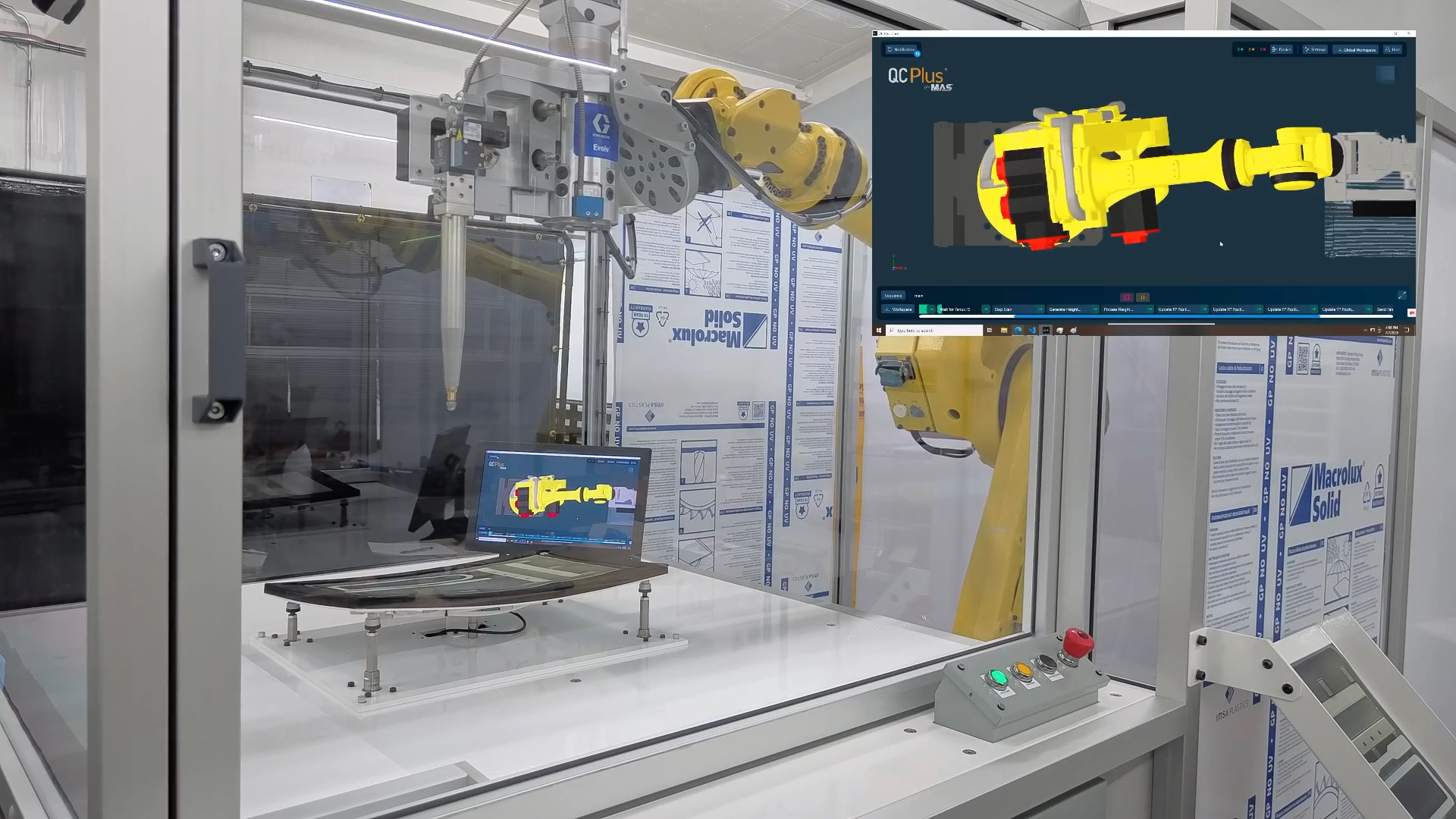
QC Plus® Scan-to-Path™ turns 3D scan data into production-ready robot paths, so automated processes adapt to each part’s actual condition instead of assuming it matches the CAD model.
Manufacturing Reality Doesn’t Perfectly Match Engineered Models.
Composite parts distort. Forgings vary. Weldments move. Tooling drifts over time. Traditional automation assumes every part is identical, leaving engineers to re-teach paths, hand-compensating and building in margin to keep processes running.
The result: more scrap, longer setup, and less trust in automation.

Scan. Adapt. Execute.
QC Plus® closes the gap between design intent and manufacturing reality in four steps:

Production-Ready AI for Manufacturing
QC Plus® uses supervised machine learning to enhance robotic path generation, not replace engineering judgment. It combines 3D measurement data, deterministic execution, and traceable decision-making with machine learning so you get adaptive performance without losing repeatability or accountability.
AI should enhance manufacturing expertise. Not replace it.
Built on metrology and automation engineering expertise, QC Plus® delivers:

More Than Software
MAS combines advanced software, metrology expertise, and real-world automation experience built around four pillars:
QC Plus® is built with a deep integration with FANUC robotics, pairing FANUC’s industrial robotic platform with MAS’s metrology, inspection, and adaptive path generation expertise. That combination means proven, production-hardened hardware working in lockstep with software that adjusts to each part’s real-world condition.
The result: robotic automation that’s both reliable at scale and adaptable to manufacturing variation, backed by two companies with deep expertise in their respective domains.
Speak to an engineer to learn more about our QC Plus technology.
If part-to-part variation is limiting your automation, QC Plus® Scan-to-Path™ can help close the gap between measurement and execution.